NON-URGENT OUTPATIENT CONSULTATION

This service does not provide urgent or emergency medical care. For chest pain or pressure, severe shortness of breath, fainting/syncope, or acute stroke/neurological symptoms (facial droop, arm weakness, speech difficulty), call 911 or proceed to the nearest Emergency Department immediately.

INTERNAL MEDICINE · LAWRENCE PARK CARDIOLOGY · TORONTO

Thoughtful medical evaluation for endurance training after forty.

A focused, 1-to-2 visit OHIP-insured Internal Medicine consultation for cyclists, runners, and endurance athletes aged 40 and older. Dedicated to cardiovascular risk stratification, systemic medical readiness prior to significant training blocks or events, and the evaluation of exertional symptoms—supported by accredited on-site cardiac diagnostics and Cardiology & Internal Medicine colleagues at Lawrence Park Cardiology.

Early morning unpaved gravel road winding through rolling hills in southern Ontario
FIG. 01 — ENDURANCE LONGEVITY AFTER 40 CLINICAL INTERNAL MEDICINE · TORONTO, ON
01 · CLINICAL MANDATE Internal Medicine (FRCPC)

Episodic 1-to-2 visit specialist consultation focused on internal medicine and vascular physiology in endurance athletes.

02 · PATIENT COHORT Masters Athletes Aged 40+

Pre-training cardiovascular risk evaluation, systemic physiology review, and workup of training-related medical symptoms.

03 · OHIP ELIGIBILITY OHIP-Insured Patients Only

Requires a valid Ontario Health Card and a medically indicated referral from an Ontario Family Physician or Nurse Practitioner.

04 · MULTIDISCIPLINARY SETTING Lawrence Park Cardiology

EQI-accredited non-invasive cardiac lab on site, with direct access to Cardiology & Internal Medicine colleagues when needed.

01 · CLINICAL RATIONALE & FOCUS AREAS

Why endurance physiology after forty warrants a different clinical lens.

Habitual aerobic exercise is protective, yet high-volume and high-intensity training after age 40 intersects with evolving vascular biology, blood pressure reactivity, and systemic internal medicine considerations that routine checkups rarely address in athletic context.

DOMAIN 01 · VASCULAR & CARDIAC RISK

Cardiovascular & Cerebrovascular Risk Stratification

After age 40, occult atherosclerotic and neurovascular risk factors become the primary determinants of adverse exercise-related events. Even fit masters riders and runners can harbour silent hypertension, elevated lipoprotein(a), dyslipidemia, or a family history of premature vascular disease.

  • Individualized pre-training and pre-event cardiovascular risk profiling prior to stepping up training intensity or duration
  • Assessment of resting and exertional blood pressure responses (including masked or exercise-induced hypertension)
  • Lipid, apolipoprotein, and vascular risk interpretation tailored to active masters athletes
  • Neurovascular and stroke risk evaluation grounded in subspecialty stroke and internal medicine training
DOMAIN 02 · SYSTEMIC INTERNAL MEDICINE

Internal Medicine Aspects of Endurance Performance

Sustained aerobic output depends on integrated hematologic, metabolic, endocrine, and renal physiology. When a masters athlete experiences unexplained fatigue, blunted adaptation, or impaired recovery, a systematic internal medicine evaluation helps separate medical pathology from training load.

  • Hematologic and iron-store assessment (ferritin, transferrin saturation, hemoglobin indices, foot-strike or endurance hemolysis factors)
  • Metabolic, glycemic, and thyroid regulation in the context of high energy expenditure
  • Renal function, electrolyte homeostasis, and safe medication selection (e.g., antihypertensives that do not blunt exercise capacity)
  • Structured return-to-exertion medical evaluation following systemic or viral illness
DOMAIN 03 · SYMPTOM & DIAGNOSTIC EVALUATION

Evaluation of Exertional Symptoms & Telemetry Findings

Masters athletes closely monitor power meters, pace, and heart-rate straps—and are often the first to notice subtle physiological shifts. New symptoms or abnormal heart-rate patterns warrant objective clinical and diagnostic assessment rather than guesswork.

  • Workup of exertional dyspnea, atypical chest discomfort, presyncope, or unexplained drops in sustainable threshold
  • Evaluation of palpitations, ectopy, or heart-rate anomalies observed during or after rides and runs
  • Targeted ordering and clinical interpretation of Exercise Stress Testing (GXT), Echocardiography, and Ambulatory Holter Monitoring
  • Clear, evidence-based medical guidance on safe training boundaries while investigations are completed
APPROPRIATE OHIP REFERRAL INDICATIONS

When to consider a referral with your Family Physician

In accordance with the Ontario Health Insurance Plan (OHIP) Schedule of Benefits, specialist Internal Medicine consultations are provided for patients with a specific medical question or clinical indication identified by their primary care provider:

INDICATION A
Pre-Significant Training or Event Risk Evaluation (Age 40+)

Adults over 40 with one or more vascular or metabolic risk factors (hypertension, dyslipidemia, family history, prior smoking, or returning from a sedentary period) planning a substantial increase in endurance training or event participation.

INDICATION B
Exertional Symptoms or Unexplained Performance Decline

New or unexplained shortness of breath out of proportion to effort, chest tightness, palpitations, unexpected heart-rate surges/drops, dizziness, or persistent medical fatigue unresponsive to rest.

INDICATION C
Internal Medicine Optimization in the Active Patient

Management of hypertension, lipid abnormalities, iron deficiency, metabolic dysregulation, or neurovascular risk factors in an endurance athlete where medication choice and physiological load interact.

Minimalist editorial illustration combining topographic elevation contours with an arterial pulse waveform
FIG. 02 — TOPOGRAPHIC LOAD & CARDIOVASCULAR PHYSIOLOGY
02 · CONSULTATIVE MANDATE & PRACTICE BOUNDARIES

A focused 1-to-2 visit Internal Medicine consultation.

Dr. Khosravani sees patients at Lawrence Park Cardiology on a dedicated, as-needed consultative basis. The pathway is intentionally structured as an episodic specialist assessment—typically one consultation, with a second follow-up visit when diagnostic tests are ordered—working in partnership with your Family Physician.

STEP 01 INTAKE & TRIAGE

Physician Referral to Lawrence Park Cardiology

Your Family Physician or Nurse Practitioner submits a referral via Ocean eReferral or clinic fax (647-347-6647) requesting an Internal Medicine consultation with Dr. Houman Khosravani. Include recent bloodwork or prior cardiac tests if available.

STEP 02 VISIT 1 · CONSULTATION

Comprehensive Internal Medicine Evaluation

A thorough clinical consultation reviewing your medical, vascular, and family history alongside your endurance training volume, intensity distribution, and symptoms—followed by a focused internal medicine physical examination and risk stratification.

STEP 03 WHEN INDICATED

Targeted On-Site Diagnostic Investigations

When clinically indicated, non-invasive cardiac testing (ECG, Exercise Stress Test, Resting or Stress Echocardiogram, Holter monitoring) is arranged directly at Lawrence Park Cardiology alongside targeted laboratory investigations.

STEP 04 VISIT 2 · FOLLOW-UP

Diagnostic Synthesis & Report to Primary Care

If diagnostic tests were ordered, a second focused consultation is scheduled to review your results, outline evidence-based medical guidance for safe training, and transmit a comprehensive consultation report back to your Family Physician.

REGULATORY & MEDICO-LEGAL CLARITY (CPSO & CMPA ALIGNED)

Clear boundaries of the consultation mandate

Clear expectations protect patient safety and continuity of care. Please review the scope of this episodic Internal Medicine consultation before requesting a referral:

WHAT THIS CONSULTATION PROVIDES
  • Episodic Specialist Evaluation (1–2 Visits): A focused Internal Medicine consultation addressing cardiovascular readiness, systemic physiology, and exertional symptoms in athletes 40+.
  • OHIP-Insured Medical Care: Billed strictly under the Ontario Schedule of Benefits for valid OHIP cardholders with a medically indicated physician/NP referral. Zero private membership or concierge fees.
  • Evidence-Based Diagnostic Workup: Clinical ordering and interpretation of accredited cardiac and laboratory testing when medically warranted by history, risk profile, or symptoms.
  • Continuity with Primary Care & Specialist Colleagues: Full written consultation note returned to your Family Physician, with seamless internal referral to Lawrence Park Cardiology Cardiologists or Internists if ongoing specialist management is needed.
WHAT THIS CONSULTATION IS NOT
  • Not Longitudinal Primary Care: Dr. Khosravani acts as a consulting specialist and does not assume ongoing primary care or routine prescription renewals unrelated to the consultation.
  • Not Commercial Athletic Coaching: While training load and physiology inform the clinical assessment, the consultation does not provide commercial coaching, daily workout programming, or sport-lab lactate/VO2max packages.
  • Not an Uninsured "Executive Health" Screening Package: Diagnostic tests are ordered strictly on clinical merit and medical indication in keeping with CPSO and OHIP standards.
  • Not Urgent or Emergency Care: As an as-needed outpatient consultation clinic, acute symptoms (chest pain, syncope, severe dyspnea, or neurological deficits) must be evaluated immediately in an Emergency Department.
03 · CLINICAL ENVIRONMENT & COLLEAGUES

Integrated within Lawrence Park Cardiology.

Consultations take place at Lawrence Park Cardiology (3080 Yonge Street, Suite 4022, Toronto)—a full-service cardiology, internal medicine, and EQI-accredited diagnostic facility in midtown Toronto.

ACCREDITED ON-SITE DIAGNOSTIC LABORATORY

Non-Invasive Cardiac & Vascular Testing

When your initial consultation identifies an indication for objective testing, investigations are coordinated directly within the clinic's EQI-accredited facility:

Exercise Stress Test (GXT)
Graded treadmill exercise testing evaluating exertional ECG changes, hemodynamic blood pressure response, heart-rate recovery, and functional capacity.
Resting & Stress Echocardiography
Structural and functional cardiac ultrasound (including contrast and bubble studies when indicated) to evaluate ventricular geometry, valvular function, and ischemia.
12-Lead ECG & Extended Holter Monitoring
Resting electrocardiography and continuous ambulatory rhythm monitoring (24-hour, 48-hour, 72-hour, 7-day, or 14-day monitors) to capture exertional arrhythmias.
24-Hour Ambulatory Blood Pressure Monitoring (ABPM)
Continuous 24-hour blood pressure profiling to assess masked, nocturnal, or exercise-related hypertension. (Note: Per Ontario regulations, 24-hour ABPM is an uninsured diagnostic service across Ontario; fee details are disclosed prior to booking.)
COLLABORATIVE SPECIALIST CARE

Seamless Access to Cardiology & Internal Medicine Colleagues

Most masters athletes require only a 1-to-2 visit Internal Medicine consultation to clarify risk and return safely to training. However, if your evaluation or testing uncovers a condition requiring subspecialty cardiac intervention or longitudinal follow-up, you are already inside a comprehensive specialist group:

  • Clinical Cardiology & Electrophysiology: Direct internal collaboration with Lawrence Park Cardiology's staff Cardiologists and Cardiac Electrophysiologists for complex coronary disease, structural heart findings, or arrhythmia ablation/management.
  • Internal Medicine & Risk Clinics: Access to Internal Medicine colleagues specializing in longitudinal Hypertension, Diabetes, and Lipid management when ongoing specialist follow-up is indicated.
  • Multidisciplinary Allied Health: On-site Cardiac Rehabilitation & Wellness programming supported by Registered Kinesiologists and Registered Dietitians when structured clinical rehabilitation is appropriate.
  • Academic Hospital Linkages: Advanced cardiac imaging (Cardiac CT, MRI, Nuclear Perfusion) is coordinated through affiliated academic hospital centres in Toronto when clinically required.
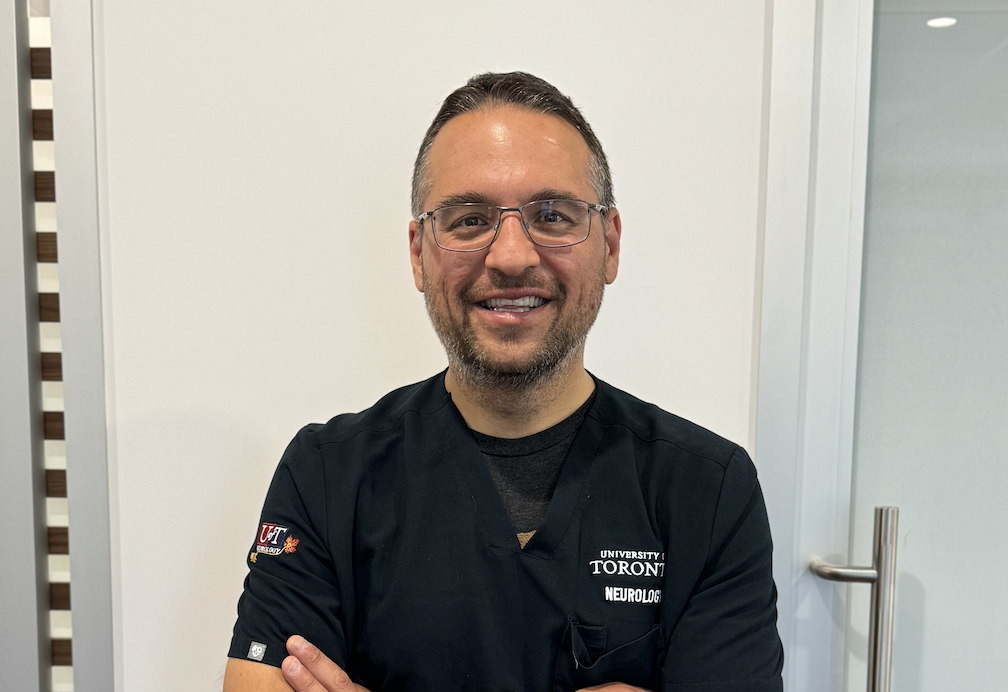
Portrait of Dr. Houman Khosravani, MD, PhD, FRCPC
DR. HOUMAN KHOSRAVANI
MD, PhD (Neuroscience), FRCPC
Internal Medicine · Critical Care · Stroke
04 · PHYSICIAN PROFILE & ENDURANCE BACKGROUND

Physician, Intensivist, Stroke Specialist—and Gravel Cyclist.

Dr. Houman Khosravani, MD, PhD, FRCPC is a specialist in Internal Medicine, Critical Care Medicine, and Stroke / Neurovascular Medicine. He practices stroke neurology and critical care medicine at Sunnybrook Health Sciences Centre, holds an academic appointment in the Department of Medicine at the University of Toronto, and serves as a Consulting Internist at Lawrence Park Cardiology.

Dr. Khosravani completed his MD and PhD in Neuroscience at the University of Calgary, followed by residency training at the University of Toronto and Western University, and clinical fellowships in Critical Care Medicine, Neurocritical Care, and Stroke.

ROYAL COLLEGE SPECIALTY Internal Medicine (FRCPC) Fellowship training in Critical Care, Neurocritical Care & Stroke
ACADEMIC & HOSPITAL PRACTICE Sunnybrook Health Sciences Centre Department of Medicine, University of Toronto
OUTPATIENT CONSULTATION CLINIC Lawrence Park Cardiology 3080 Yonge Street, Suite 4022, Toronto, ON
GRADUATE & MEDICAL EDUCATION MD, PhD (Neuroscience) University of Calgary · Residency at U of T & Western
PERSPECTIVE AS AN ENDURANCE & GRAVEL CYCLIST

Why focus on masters endurance athletes over forty?

Outside of hospital and clinical medicine, Dr. Khosravani is a dedicated gravel and endurance cyclist. Years of structured training and long-distance gravel events—combined with clinical practice in Internal Medicine, Critical Care, and Stroke—highlighted a recurring need among masters athletes: cyclists, runners, and endurance athletes over 40 frequently seek an evidence-based Internal Medicine evaluation of their cardiovascular and systemic readiness from a physician who understands training load, power and heart-rate metrics, and the physiological demands of endurance sport.

Clinical Mandate Notice: All consultations are conducted strictly within Lawrence Park Cardiology under Ontario Health Insurance Plan (OHIP) and CPSO standards as an episodic (1–2 visit) Internal Medicine assessment.


05 · HOW TO INITIATE A CONSULTATION

OHIP Referral Pathway at Lawrence Park Cardiology.

As an Ontario specialist consultation practice, appointments require a referral from a Family Physician, Primary Care Physician, or Nurse Practitioner. Choose your view below for step-by-step instructions.

PATIENT GUIDE · VALID OHIP CARD REQUIRED

How to request a referral from your Family Doctor

  1. Confirm Eligibility: You must be 40 years of age or older, hold a valid Ontario Health Insurance Plan (OHIP) card, and have a clinical question or cardiovascular/internal medicine risk consideration related to endurance exercise.
  2. Download the Official LPC Referral Form: Download or print the official Lawrence Park Cardiology Referral Form (PDF) ↗ to bring to your Family Physician, Walk-In Physician, or Nurse Practitioner (or direct their office to lpcardiology.com/online-referral/ ↗).
  3. Discuss Your Clinical Question with Your Primary Care Provider: Share your training context, any exertional symptoms (e.g., dyspnea, chest discomfort, palpitations, unexplained fatigue), or cardiovascular risk factors (blood pressure, lipids, family history).
  4. Clinic Triage & Scheduling: Once your physician faxes the referral to Lawrence Park Cardiology (647-347-6647) or submits via Ocean eReferral, the clinic triage team will contact you directly to schedule your consultation.
WHAT TO BRING TO VISIT 1

Bring your valid OHIP Health Card, an up-to-date list of medications and supplements, copies of any recent bloodwork or prior cardiac tests, and a brief summary of your typical weekly training volume, upcoming target events, and specific questions.